Thursday, 26 September 2013

Asia's Take Over!

"Hollywood is becoming Asianised in diverse ways, while Asian film industries are in turn becoming Hollywoodised." (Klein, 2004, pg. 61)
This was written over 9 years ago in the time of The Matrix, Blade, Rush Hour, Kung Pow, Hero, Crouching Tiger, Hidden Dragon and the list goes on! All of these films were becoming hits in Hollywood either being converted for western audiences (The Departed) or involving Asian film conventions (The Matrix). Klein noted (pg. 361) that Hollywood was gobbling up the global market share of the film world, though he continued to explain (pg. 362) that Hollywood and Asian film industries were becoming 'knitted' together via a number of factors for a global audience. Why this was happening though, especially with Asian films at the time Klein tried to explain. In 2004, apparently a number of factors helped the rise as interest in the culture rose and participation of martial arts increased (pg. 361).
Obviously there would be more to it, but it was undeniable after years of Hollywood domination in Asia and over the world, finally a market (the asian market) was putting its stamp all over tinsel town.
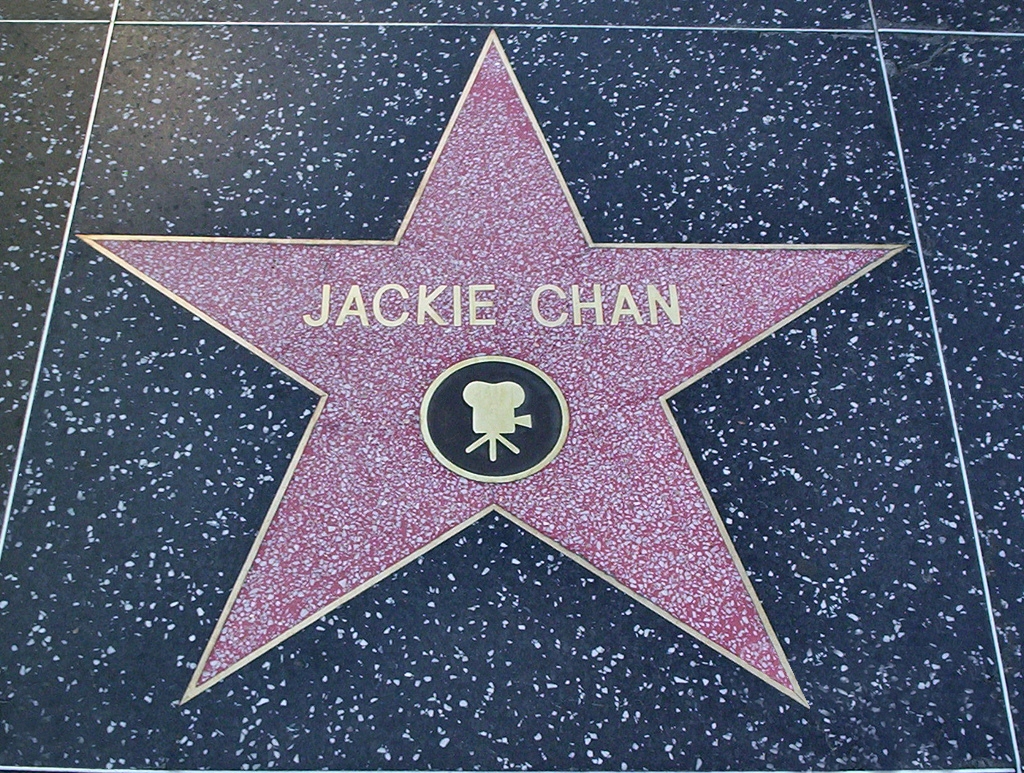
We fast forward to 2013 to see what has happened in the time since the Asianisation took place.
It seems Asianisation was short lived and the Jungian archetype of the ‘Hero’ has taken over. Films like Iron Man, The Dark Knight, The Avengers and more have taken over Hollywood and have become money making machines. According to Box Office Mojo (2013), out of the top 15 grossing films of all time 5 have been superhero films. These superhero films have started to take over since 2008 when The Dark Knight stunned audiences on the cinematic quality that Christopher Nolan brought out in Batman. We no longer see Asian culture and conventions portrayed in Hollywood as a new fad has come in a pushed it out of the picture. It could be argued though that the popularity of martial arts helped inspire the new generation of superhero films to prosper. Even though Asianisation may be over for now, it still lives on in glimpses throughout the ‘Superheroisation’ of Hollywood.
References
2013, 'All Time Box Office', Box Office Mojo, retrieved 26 September, <http://boxofficemojo.com/alltime/world/>

Klein, C 2004, 'Martial arts and the globalization of US and Asian film industries', Comparative American Studies, vol. 2, no. 3, pp. 360-384

Monday, 16 September 2013

The Specular Economy


"We are becoming more conscious of how we present ourselves and how others perceive us" (2010, pg.498). This is Marshall's definition of what he calls the Specular Economy. People may deny it, but everyone does their best to look the part before they head out. Whether it be to impress a friend, a partner or a future employer, we generally 'check' ourselves before we leave (Marshall, 2010, pp. 499). We do this checking of ourselves as in this day and age we are all subject to, and fear judgement from others. Mirrors generally provide the medium for us to check, and mirrors can be seen as a re-presentation of ourselves on a screen (Marshall, 2010, pp. 499). Moving into the world of globalisation now and Web2.0 technologies, we see that we re-present ourselves now for the online world. Marshall (pp.499) writes that in the online world we are producing a persona for our online network of 'friends' to see. We are re-producing an image of ourselves to a wider audience but it may not be an accurate representation. Marshall writes (pp. 499) that there is an aspect of fame that the online world presents to the average person in society. We see celebrities being judged in magazines and people point out strengths and weaknesses in the images they see. With social media profiles, people have the ability to place what pictures of themselves they like, with people generally placing photos up that they are confident they look good in. This gives a false sense of appeal akin to a celebrity in a magazine as people are allowing their 'image' to be judged, with the more likes giving the person more confidence. Marshall writes that “Celebrity still has become comfortably part of the new specular economy, but it has changed the way that public personas are conveyed and celebrated.” This is an accurate summary noting that celebrity has transitioned to the social network. The world is now a specular economy with the rise in popularity of seeing what other people are doing and comparing yourself to them through the virtual medium.

References:
Marshall, D 2010, 'The Specular Economy', Society, vol. 47, no. 6, pp. 498-502

Tuesday, 10 September 2013

Interpretation of the Video Game

"It's not always easy to determine when we have surrendered our judgement to someone else." (Rushkoff, 1999, p.3) cited in Raessens (p. 375). 
Interpretation, a part of the participatory media culture and Raessens’ "domains of participation" (p.373), is critical to the rise and fall of media forms (video games in this instance). The way they are marketed to the public is critical in how they will sell. Advertising agents market video games in conjunction with developers to create certain hype about the games. But the view they put on it can always be misinterpreted by the average person. 
The most recent game I bought and favourite of all time was The Last of Us by Naughty Dog. The game puts us into the shoes of single parent Joel in a post-apocalyptic United States. He travels around America to take a young girl named Ellie, to a Medical center as she could be the cure for the outbreak of disease. It is a fantastic game that takes you on a roller coaster of emotions as you battle as Joel and become more protective of Ellie.
A simple Google search will show you the game has been a critically acclaimed masterpiece receiving a majority of near perfect ratings. But this is not everyone's view.
Shearer (2013) notes that for some, Ellie “was still a bit too much of a damsel-in-distress” even though we see her hold her own throughout the game. The developers, Naughty Dog, were confused by the criticism as they thought they had done an “extraordinary job of creating strong characters” female or not. Shearer notes throughout the game you get to take control of Ellie and that she may even be more emotionally stronger than Joel.
The interpretation of Ellie being this Damsel in distress was made from a minority and this could have been due to cultural or media based factors.


Raessens writes “Representations are thus not only a reflection of society; they also play an active role in shaping it.” An example he uses is of Lara Croft and how she can be seen as an independent can do woman, but also as a woman built for the male gaze.
Interpretation is a strong thing and cultural factors can impact in the way people play and perceive their video games.

References

Raessens, J 2005, 'Computer games as participary media culture', Handbook of Computer Game Studies, MIT Press, Cambridge, Mass, pp. 373-388.

Shearer, S 2013, 'Naughty Dog Responds to The Last of Us Sexism Claims', retrieved September 10 2013, <http://www.escapistmagazine.com/news/view/126648-Naughty-Dog-Responds-to-The-Last-of-Us-Sexism-Claims>


Friday, 30 August 2013

Welcome to the Blogosphere


Habermas (cited in McKee 2005, p.6) explains the public sphere as “A domain of our social life where such a thing as public opinion can be formed [where] citizens…deal with matters of general interest without being subject to coercion…[to] express and publicise their views.” 

Carpignano (cited in McKee 2005, p. 7) notes that the idea of the public sphere was born in the 17th century as “the outrageous concept that every person in society should be treated equally” emerged. So in the 17th century the public sphere was a physical space where people from all backgrounds could have their say on matters that were of interest in the town they were in. Fast forward to now and the virtual world of Web2.0 and we have the new virtual public sphere or Blogosphere.

 Blogs allow people of all walks of life (as long as they have an internet connection) to let loose on what they think on particular topics. Bloggers also have the opportunity to engage in debates via the comments section on issue they may have differing opinions on. There is proof of minorities having their say as well as a study into the 2007 election showed minor blogs were dominant in putting their opinion forward (Bruns, 2010, pg. 281). Bruns continues through to mention blog readers follow a flow as these minor blogs link to major blogs which in turn have linked to mainstream media giving the less powerful less of a voice (2010, pg. 282). 

If we move to social media we can see the like of Facebook, Twitter and YouTube giving voice to minorities again but are these opinions healthy and evidence based debates? Bruns explains (2010, p. 285) that in order to engage in public discussion a person must put their social, personal and lived experiences aside. This allows for a legitimate public debate but looking over my Twitter, Facebook and YouTube accounts not much of that is happening. 


The public sphere in the virtual world is a sphere of ‘Trolling’ where attacks and opinions are made based on social or personal feelings. If in the odd chance you come across a legitimate debate, you’ll be sure to find someone arguing based on illegitimate factors. In essence, the traditional public sphere is in hiding.

References

Bruns, A, Burgess, G, Highfield, T, Kirchoff, L & Nicolai, T 2010, ‘Mapping the Australian Networked Public Sphere’, Social Science Computer Review, vol. 29, no. 3, retrieve 30 August 2013, <http://ssc.sagepub.com/content/29/3/277>


Saturday, 24 August 2013

The Prosumer

According to Toffler (1980, p 266) prosumption came about after the separation of the producer and consumer drove a wedge into society. Not long after though, he believed the capitalist world was moving away from this separation and into its "primordial economic form" of prosumption (Ritzer, G & Jurgensen, N, 2010, p. 17). The modern society is what Ritzer (2010, p. 17) calls the "prosumer society" in which we all produce and consume the same aspects that make up our identity.
So how exactly are we prosumer’s? How does it form our identity?
Ritzer gives multiple examples of the prosumer society that we live in like:

· - Being a caller on a call-in radio show
· -Using do it yourself medical technologies
· -Being part of reality TV

This has expanded to the internet as well with sites like Facebook and Instagram allowing users to create the social structure of their account and interact with people they allow within their structure.
People are allowing their identity being consumed online line by producing the identity that they wish people to consume. There is no longer a middle man to form the identity of a subject or person for you as this new age of the public sphere is allowing people to make their own decisions.

Any prosumer in the social world though needs to be aware that their identity isn't only being consumed by those we let into our social structure. For example Facebook is profiting off our use of their web code. Facebook sells the information we share on their infrastructure as a trade for them letting us use their design for free. 
Third parties now have our information which allows advertising companies to use the internet and advertise specific products to us. This is based on what we say on Facebook, what we like and who we become friends with (their information). If you like a whole heap of dance music artists, you’ll be flooded with ads about dance music. Prosumption can be a dangerous idea, that can definitely affect you if not upfront.

References:

Ritzer, G & Jurgenson, N 2010, 'Production, Consumption, Prosumption: The nature of capitalism in the age of the digital 'prosumer'', Journal of Consumer Culture, vol. 10, no. 1, pp. 13-32
Toffler, A 1980 The Third Wave., William Morrow, New York

Wednesday, 7 August 2013

Innovators or Pirates?


"Blaming the victim is a way of [people] maintaining belief in a just world" (Martin, Moore & Salter 2010).
This quote is a very important one I believe, as we know in most cases the victim always loses out. The argument of DJ's and hip hop artists pirating and ripping off of other peoples work came about in the mid to late 80's. A new type of music production had been created through advancements in technology called sampling.
The documentary Copyright Criminals (2009) goes through the history of sampling and how it began to define and become so controversial in hip hop music. Dj's were made out to be the victim in the 80's and were the blame of this sampling controversy. By watching the documentary though, it seems artists only started to care about the use of their own material when Hip Hop became a money making machine.
They seem split on the idea as Aerosmith front man Steven Tyler teamed up with Run DMC to produce 'Walk this Way', a record which Tyler sung on. Some artists though, as highlighted in the documentary, didn't approve of what Hip Hop was doing as they believed they were just ripping off songs. The problem with that argument though is that it's hard to find what the origin of music actually was. Inventions were built on other people's ideas and inventions, for example the car. Did the inventor of the car give a portion of profit to the person who invented the battery, door, door handle, fuel or even colour?
A remix, bootleg or mash-up are re-imaginings of songs that have been previously created and altered for a new genre or culture. When you hear a guitar riff in a song, do you think the person who created the guitar and guitar strings was paid a slice to allow the artist to create that sound? It seems hypocritical to me that lawyers be brought in to sue a DJ for a 1 bar sample taken from a song. As DJ Shock G said, "What a photographer is to the painter, is what the modern producer, DJ and computer musicians are to the instrumentalist" (Copyright Criminals, 2009).
This attempt of devaluation by suits against samplers backfired as sampling is ever present in the fastest growing production of music in the world, electronic music.

This could be of interest ----> http://soundsjustlike.com/  <---- Give it a go!

References:
Martin, B, Moore, C and Salter, C. 2010, ‘Sharing music files: tactics of a challenge to the industry’, First Monday, vol. 15, no. 12, retrieved 8 August 2013, <http://firstmonday.org/htbin/cgiwrap/bin/ojs/index.php/fm/article/view/2986/2680]>

Copyright Criminals 2009, video recording, Changing Images, USA


Wednesday, 31 July 2013

Horrible Hollywood!

We all go to the cinemas these days to wind down by watching a film. We splurge at the candy bar, sit through a 2 hour film (with 20mins of ads) and walk away feeling satisfied. But these days I cannot stand the films being shown at cinemas. Films obviously all have a conflict and follow the journey of resolving this conflict, but for some reason it's all sunshine and lollipops. 
As Rabiger (2004) points out films follow a three act structure which feels right to the general public. There is a beginning, middle and end which go from the inciting moment to the climax and resolution. TV Tropes call this the 'Hollywood Formula'. Now the structure's boring but works, except it isn’t written that every film has to have a happy ending, there just needs to be a resolution.                                                        
Hollywood has decided every film must have a happy ending, and a film with no happiness will not get past the proposal. Films worth watching that are of significance and mind boggling themes are being pushed into the abyss, as commercial cinema complex's play films that are box office hits. A couple of years ago an Australian film named 'Animal Kingdom' was praised by the film world. I was working at a Broadmedows cinema; I was so excited for it to be released only to find out that a select few cinemas would screen it. Hang on, an Australian film not being shown at every cinema in Australia? Surely that's not right.
As Pieterse (2009) writes, globalisation is “shrinking the world” and involves the reconfiguration of states with regionalisation. Western cinema has become regionalised to a mainstream of Hollywood cinema.
Hollywood's films were making more money hence the big cinema chains didn’t want to support an Australian film with the gamble of losing money. Seeing this happen I realised Hollywood was colonising the western cinema world.
Hollywood has Deterritorialised western countries and their separate film cultures by implementing their money making formula onto private corporations.


References

Pieterse, J 2009, Globalisation and Culture: Global Melange, Rowman & Littlefield, USA

Rabiger, M 2004, Directing the Doumentary, 4th edn, Focal Press, Boston

TV Tropes, 'The Hollywood Formula', retrieved 1 August 2013, <
http://tvtropes.org/pmwiki/pmwiki.php/Main/TheHollywoodFormula>

Saturday, 27 July 2013

Informational Flows

I walked into the kitchen to get something to eat, as I was hungover and starving, and saw my mother placing a stamp on a letter to send out. I asked who it was for and she said something, but I had zoned out straight away as I stared deep into my fridge for some nourishment.
Later in the day I asked her why she was using mail as her informational medium and she told me "I find it more authentic and easier". It got me thinking a bit and we started to compare how she used to send and receive information. She told me it was either sending mail, telephone calls or most of the time face to face interaction. Then she told me nothing much has changed as she still uses these same mediums, but does SMS a lot more and sends an e-mail occasionally. She said she had tried to use Facebook and Twitter but found these mediums confusing, and found slang like YOLO silly and hard to understand.
She then mentioned she does use the internet now to find out most of her news, but only after hearing from the television and if she wants to investigate the subject more.
In the Rantanen reading (2005, p.7), he mentions different definitions of globalisation. One that caught my eye was Tomson's as he describes it as "the growing interconnectedness of different parts of the world, a process which gives rise to complex forms of interaction and interdependency". After talking to my mother and reading this, I realized that globalisation may be a way to connect people faster and easier from different corners of the world. But due to these forms becoming complex we are leaving those behind who do not grow up with the technology to either catch up, or disconnect themselves from the growing social and technological landscape. As well as this though, younger generations are becoming more and more socially inept, as they struggle to hold a conversation face to face due to their use of explaining themselves in abbreviations and thumbs. Therefore globalisation is affecting every generation in positive and negative ways.

References:

Rantanen, T 2005, The Media and Globalization, p.7, Sage, London

Tuesday, 16 July 2013

Hello!

Hi!
My name is Christopher McFarlane and I'm 19 years old.
Currently in my second year of completing a Bachelor of Film and Digital media, (majoring in film) and this is my blog on globalization for ALC215!
In my spare time I watch film and documentary's, play sport (AFL mostly), as well as djing and producing electronic music. My plan is to incorporate film with the globalization topic each week, but may end up talking about the recent changes in electronic dance music (EDM) as well, to further my points.
I hope you all enjoy my blog and feel free to comment, I look forward to the next 12 weeks of blogging on this topic :-)