Thursday, 26 September 2013

Asia's Take Over!

"Hollywood is becoming Asianised in diverse ways, while Asian film industries are in turn becoming Hollywoodised." (Klein, 2004, pg. 61)
This was written over 9 years ago in the time of The Matrix, Blade, Rush Hour, Kung Pow, Hero, Crouching Tiger, Hidden Dragon and the list goes on! All of these films were becoming hits in Hollywood either being converted for western audiences (The Departed) or involving Asian film conventions (The Matrix). Klein noted (pg. 361) that Hollywood was gobbling up the global market share of the film world, though he continued to explain (pg. 362) that Hollywood and Asian film industries were becoming 'knitted' together via a number of factors for a global audience. Why this was happening though, especially with Asian films at the time Klein tried to explain. In 2004, apparently a number of factors helped the rise as interest in the culture rose and participation of martial arts increased (pg. 361).
Obviously there would be more to it, but it was undeniable after years of Hollywood domination in Asia and over the world, finally a market (the asian market) was putting its stamp all over tinsel town.
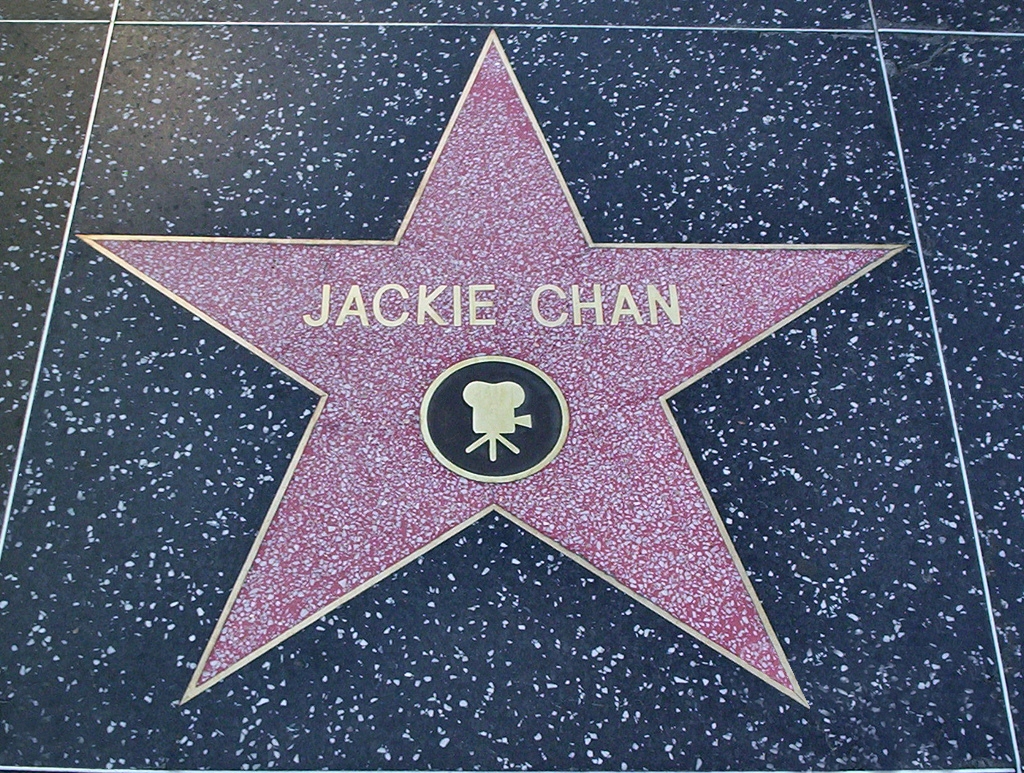
We fast forward to 2013 to see what has happened in the time since the Asianisation took place.
It seems Asianisation was short lived and the Jungian archetype of the ‘Hero’ has taken over. Films like Iron Man, The Dark Knight, The Avengers and more have taken over Hollywood and have become money making machines. According to Box Office Mojo (2013), out of the top 15 grossing films of all time 5 have been superhero films. These superhero films have started to take over since 2008 when The Dark Knight stunned audiences on the cinematic quality that Christopher Nolan brought out in Batman. We no longer see Asian culture and conventions portrayed in Hollywood as a new fad has come in a pushed it out of the picture. It could be argued though that the popularity of martial arts helped inspire the new generation of superhero films to prosper. Even though Asianisation may be over for now, it still lives on in glimpses throughout the ‘Superheroisation’ of Hollywood.
References
2013, 'All Time Box Office', Box Office Mojo, retrieved 26 September, <http://boxofficemojo.com/alltime/world/>

Klein, C 2004, 'Martial arts and the globalization of US and Asian film industries', Comparative American Studies, vol. 2, no. 3, pp. 360-384

Monday, 16 September 2013

The Specular Economy


"We are becoming more conscious of how we present ourselves and how others perceive us" (2010, pg.498). This is Marshall's definition of what he calls the Specular Economy. People may deny it, but everyone does their best to look the part before they head out. Whether it be to impress a friend, a partner or a future employer, we generally 'check' ourselves before we leave (Marshall, 2010, pp. 499). We do this checking of ourselves as in this day and age we are all subject to, and fear judgement from others. Mirrors generally provide the medium for us to check, and mirrors can be seen as a re-presentation of ourselves on a screen (Marshall, 2010, pp. 499). Moving into the world of globalisation now and Web2.0 technologies, we see that we re-present ourselves now for the online world. Marshall (pp.499) writes that in the online world we are producing a persona for our online network of 'friends' to see. We are re-producing an image of ourselves to a wider audience but it may not be an accurate representation. Marshall writes (pp. 499) that there is an aspect of fame that the online world presents to the average person in society. We see celebrities being judged in magazines and people point out strengths and weaknesses in the images they see. With social media profiles, people have the ability to place what pictures of themselves they like, with people generally placing photos up that they are confident they look good in. This gives a false sense of appeal akin to a celebrity in a magazine as people are allowing their 'image' to be judged, with the more likes giving the person more confidence. Marshall writes that “Celebrity still has become comfortably part of the new specular economy, but it has changed the way that public personas are conveyed and celebrated.” This is an accurate summary noting that celebrity has transitioned to the social network. The world is now a specular economy with the rise in popularity of seeing what other people are doing and comparing yourself to them through the virtual medium.

References:
Marshall, D 2010, 'The Specular Economy', Society, vol. 47, no. 6, pp. 498-502

Tuesday, 10 September 2013

Interpretation of the Video Game

"It's not always easy to determine when we have surrendered our judgement to someone else." (Rushkoff, 1999, p.3) cited in Raessens (p. 375). 
Interpretation, a part of the participatory media culture and Raessens’ "domains of participation" (p.373), is critical to the rise and fall of media forms (video games in this instance). The way they are marketed to the public is critical in how they will sell. Advertising agents market video games in conjunction with developers to create certain hype about the games. But the view they put on it can always be misinterpreted by the average person. 
The most recent game I bought and favourite of all time was The Last of Us by Naughty Dog. The game puts us into the shoes of single parent Joel in a post-apocalyptic United States. He travels around America to take a young girl named Ellie, to a Medical center as she could be the cure for the outbreak of disease. It is a fantastic game that takes you on a roller coaster of emotions as you battle as Joel and become more protective of Ellie.
A simple Google search will show you the game has been a critically acclaimed masterpiece receiving a majority of near perfect ratings. But this is not everyone's view.
Shearer (2013) notes that for some, Ellie “was still a bit too much of a damsel-in-distress” even though we see her hold her own throughout the game. The developers, Naughty Dog, were confused by the criticism as they thought they had done an “extraordinary job of creating strong characters” female or not. Shearer notes throughout the game you get to take control of Ellie and that she may even be more emotionally stronger than Joel.
The interpretation of Ellie being this Damsel in distress was made from a minority and this could have been due to cultural or media based factors.


Raessens writes “Representations are thus not only a reflection of society; they also play an active role in shaping it.” An example he uses is of Lara Croft and how she can be seen as an independent can do woman, but also as a woman built for the male gaze.
Interpretation is a strong thing and cultural factors can impact in the way people play and perceive their video games.

References

Raessens, J 2005, 'Computer games as participary media culture', Handbook of Computer Game Studies, MIT Press, Cambridge, Mass, pp. 373-388.

Shearer, S 2013, 'Naughty Dog Responds to The Last of Us Sexism Claims', retrieved September 10 2013, <http://www.escapistmagazine.com/news/view/126648-Naughty-Dog-Responds-to-The-Last-of-Us-Sexism-Claims>